


 Send Inquiry
Carburizing Hardening & Tempering Services
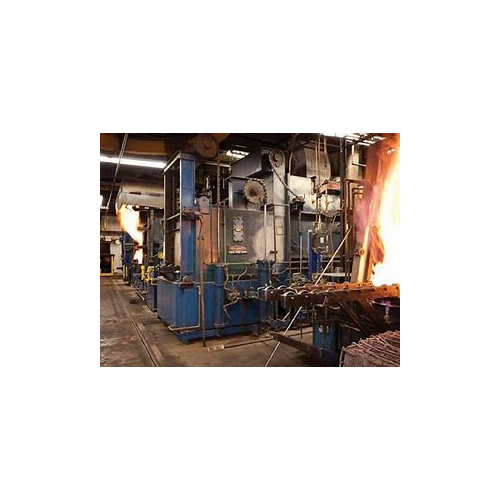

Carburizing Hardening & Tempering Services Specification
- Feature
- Enhances wear resistance, Improves fatigue strength
- Rating
- Industrial Grade
- Condition
- New
- Type
- Surface Hardening Service
- Usage
- Industrial
- Power
- Electric/Heat treated
- Voltage
- 220-440 V
- Size
- As per requirement
- Dimensions
- Customizable
- Weight
- As per component
- Application
- Improving surface hardness of components
- Fuel Type
- Electric/Hardening Furnace
- Capacity
- Depends on job size
- Cooling Medium
- Oil or Water Quenching
- Process Temperature Range
- 800°C to 950°C
- Service Type
- Carburizing, Hardening, and Tempering
- Suitable Materials
- Carbon Steel, Alloy Steel, Tool Steel
- Service Location
- On-site/Off-site
- Batch or Continuous Process
- Available
- Hardness Achieved
- Up to 60 HRC (varies with material)
- Surface Finish
- Bright, Clean Finish
- Minimum Job Quantity
- As per client specification
- Depth of Carburizing
- Up to 2 mm (as per requirement)
- Compliance Standard
- IS, ASTM standards
Carburizing Hardening & Tempering Services Trade Information
- Minimum Order Quantity
- 1 Unit
- Delivery Time
- 7 Days
About Carburizing Hardening & Tempering Services
Carburising is one of the most commonly performed steel heat treatments. Carburizing, also known as Case Hardening, is a heat treatment process that improves the surface properties of steel components. By diffusing carbon into the surface, carburizing creates a hardened case while maintaining the toughness and strength of the core. This article explores the benefits, process, and applications of carburizing in various industries.
Understanding Carburizing
Carburizing is a heat treatment technique used primarily on low carbon steel parts after machining. It is also applied to high alloy steel bearings, gears, and other components. The process involves increasing the strength and wear resistance of the steel by introducing carbon into its surface.
The process of carburizing involves heating iron or steel to a high temperature, causing a change in the grain structure of the metal. This change allows the steel to absorb carbon, resulting in the formation of a wear-resistant layer. Carburizing is widely used in the production of strong and safe metals.
During carburizing, the metal is heated in the presence of a carbon-bearing material like charcoal or carbon monoxide. The goal is to increase the hardness of the metal. The carbon content in the affected area can vary depending on the duration and temperature of the process. Generally, longer carburizing times and higher temperatures lead to greater carbon diffusion and deeper carbon penetration.
After the carburizing process, the iron or steel is rapidly cooled through quenching. This causes the outer surface, which has a higher carbon content, to become hard as it transforms from austenite to martensite. Meanwhile, the core of the metal remains soft and tough, maintaining a ferritic and/or pearlite microstructure.
Benefits of Carburizing
Carburizing offers several advantages, including:
- Enhanced wear resistance: The hardened case formed during carburizing provides excellent resistance against wear, extending the lifespan of the component.
- Retained toughness: Despite the hardened surface, the core retains its toughness and strength, ensuring the component can withstand heavy loads and impact.
- Cost-effective: Carburizing allows the use of lower-cost materials that can be easily machined or formed before heat treatment, making it an economical choice for producing complex-shaped parts.
The surface became very hard, while the interior or "core" of the part retained the toughness of low carbon steel. The engineering of surfaces of components to improve the life and performance of parts used in automobiles and aerospace engineering is an active area of research. Thermomechanical surface engineering treatments will produce extensive rearrangements of atoms in metals and alloys and a corresponding marked variation in physical, chemical and mechanical properties. Among the more important of these treatments are heat treatment processes such immersion hardening, induction hardening and case carburizing.
Automobile components such as rack and pinion, gears, cam shaft valve rocker shafts and axles, which require high fatigue resistance, are normally case hardened by carburizing. The carburizing furnaces are either gas fired or electrically heated. The carburizing temperature varies from 870 to 940 oC the gas atmosphere for carburizing is produced from liquid or gaseous hydrocarbons such as propane, butane or methane. The study of process parameters in metals during heat treatment has been of considerable interest for some years, but there has been relatively little work on process variables during the surface hardening process since controlling parameters in carburization is a complex problem. The major influencing parameters in carburization are the holding time, carburizing temperature, carbon potential and the quench time in oil. The present work is focused on the effects of carburizing temperature and holding time on the mechanical properties of carburized mild steel.
Precision Carburizing for Enhanced Performance
We specialize in surface hardening services, focusing on carburizing, hardening, and tempering processes that develop wear-resistant, durable steel components. Our advanced furnaces and precise control ensure a consistent case depth and superior surface finish, making our service ideal for gears, shafts, and other critical parts requiring improved surface properties.
Comprehensive Service Capabilities
Our facilities are equipped to handle batch or continuous operations according to job volume and specifications. We process components using oil or water quenching, adapting to your chosen material for optimal results. With IS and ASTM compliance and customizable job size and quantity, our solutions fit diverse industry needs, whether on-site or off-site.
Reliable Outcomes with Industrial Standards
Adhering strictly to industrial-grade processes, we deliver components with bright, clean finishes and enhanced mechanical properties. Our team works closely with clients, ensuring compliance, quality, and performance, whether you require large-scale production runs or specialized, tailored hardening services.
FAQ's of Carburizing Hardening & Tempering Services:
Q: How does the carburizing hardening and tempering process improve component performance?
A: Carburizing introduces carbon to the surface of steel parts at high temperatures (800C to 950C), followed by quenching and tempering. This increases surface hardness up to 60 HRC, while maintaining a tough, ductile core. The results are enhanced wear resistance and improved fatigue strength, extending the lifespan of industrial components.Q: What materials can be treated using your carburizing and hardening services?
A: Our services are suitable for a wide range of steels, including carbon steel, alloy steel, and tool steel. We tailor process parameters to suit your material grade, ensuring that the treated components meet required hardness and structural characteristics.Q: When should I opt for carburizing hardening and tempering services for my components?
A: Choose these services when you need to enhance the surface hardness and durability of parts subjected to significant wear or load, such as gears, pins, or shafts. The process is ideal during manufacturing or repair cycles for critical industrial equipment.Q: Where are the carburizing and tempering services offered?
A: We provide both on-site and off-site service options, depending on your project requirements and logistics. Components can be processed at our facility or arranged for treatment directly at your location, subject to feasibility.Q: What is the typical depth achieved during carburizing, and can it be customized?
A: We can achieve carburizing depths of up to 2 mm, tailored as per your application needs. The depth is carefully controlled and verified, ensuring optimal performance for your specific component design.Q: How does the oil or water quenching affect the final properties of the treated part?
A: The choice between oil and water quenching is based on material type and desired hardness. Oil quenching generally offers controlled cooling to minimize distortion, while water quenching provides more rapid cooling for higher hardness but may increase the risk of cracking in certain steels.Q: What are the main benefits of using your carburizing hardening & tempering services?
A: The major benefits include significantly improved wear resistance, increased surface hardness, enhanced fatigue strength, and a bright, clean surface finish. Our process extends component life, ensuring reliable operation in demanding industrial applications. Get Latest Price
Price:
- 50
- 100
- 200
- 250
- 500
- 1000+


Developed and Managed by Infocom Network Private Limited.

