


 Send Inquiry
Full Annealing Service
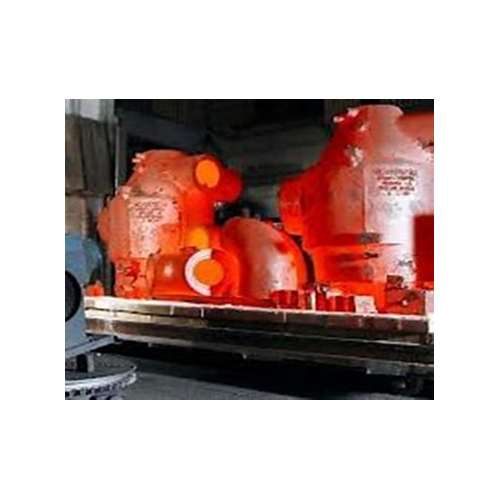

Full Annealing Service Specification
- Rating
- Standard
- Feature
- Controlled Atmosphere Annealing
- Condition
- New
- Type
- Industrial Service
- Usage
- Heat Treatment
- Power
- As per job specification
- Voltage
- 220-440 V
- Size
- Customizable as per requirement
- Dimensions
- As per component
- Weight
- Depends on job
- Application
- Refining of metal and alloy structure
- Fuel Type
- Electric/Gas
- Capacity
- Job wise
- Atmosphere Type
- Protective or Open Atmosphere
- Cooling Rate
- Controlled (as per process demands)
- Maximum Component Length
- Up to 10 meters
- Turnaround Time
- 2-5 days depending on job
- Service Location
- On-site/Off-site
- Surface Finish after Annealing
- Improved ductility and machinability
- Quality Assurance
- Testing and Certification provided
- Material Suitability
- Steel, Alloy Steel, Cast Iron, Non-ferrous metals
- Standards Followed
- IS, ASTM, DIN
- Annealing Temperature Range
- 650°C - 950°C
About Full Annealing Service
In fact, the actual definition of annealing describes only the full annealing. That is, full annealing consists of heating the steel to a temperature at or near the critical point, holding there for a time period and then allowing it to cool slowly in the furnace itself.
The main objects of full annealing are:
(i) To soften the metal,
(ii) To refine its crystalline structure, and
(iii) To relieve the stresses.
Material: The full annealing is specially adopted for steel castings and steel ingots:
process of Full Annealing
In full annealing, hypoeutectoid steels (less than 0.77% C) are heated to 30 to 60°C above the upper critical point i.e., A3 line (i.e., between 723oC and 910oC). This is to convert the structure to homogeneous single-phase austenite of uniform composition and temperature, held at this temperature for a period of time, and then slowly cooled to room temperature.
Cooling is usually done in the furnace itself by decreasing the temperature 10 to 30oC per hour to at least 30oC below the A line. Then, the alloy is removed from the furnace and air cooled to room temperature.
Now the resulting structure is coarse pearlite with excess ferrite. In this condition, the steel is quite soft and more ductile.
Precision Annealing for Industry Needs
Our service provides customizable full annealing for diverse industrial applications, designed to enhance the structural properties of metals and alloys. We ensure accurate temperature control and atmosphere selection for optimal results, meeting stringent standards for quality and safety.
Quality Assurance and Certification
Each annealing process is undertaken as per job-specific requirements with post-treatment inspection, testing, and certification. Our adherence to global standards like IS, ASTM, and DIN, along with robust quality checks, delivers consistently reliable results.
FAQ's of Full Annealing Service:
Q: How does the full annealing process work for my components?
A: Full annealing involves heating your components to a temperature between 650C and 950C, holding them at that temperature to allow structural changes, and then cooling at a controlled rate. The cooling can be performed in a protective or open atmosphere, depending on material demands, ensuring improved ductility and machinability for the treated metals.Q: What materials are suitable for your annealing service?
A: Our service is ideal for steel, alloy steel, cast iron, and various non-ferrous metals. We customize the process as per the specific composition and geometry of the component to achieve optimal results.Q: When and where can annealing services be provided?
A: We offer both on-site and off-site annealing services across India. The service schedule is finalized after assessing the job requirements and is designed to provide a turnaround time of 2-5 days depending on the scale and complexity of your project.Q: What standards and quality measures do you follow during annealing?
A: All our annealing processes adhere to IS, ASTM, and DIN standards. We carry out post-annealing testing and provide certification for every batch, ensuring consistency and reliability in metal treatment.Q: What are the benefits of full annealing for industrial components?
A: Full annealing enhances a component's ductility, machinability, and structural uniformity. It results in a refined grain structure, reduced hardness, and improved workability, making metal parts easier to fabricate and extending their lifespan in industrial environments.Q: How do you control the cooling rate and atmosphere during annealing?
A: We use advanced temperature controls and can provide either open or protective atmospheres based on process demands. Cooling rates are closely regulated to prevent unwanted stresses and achieve the desired mechanical properties for each material type.- Minimum Order Quantity
- 1 Unit
 Get Latest Price
Price:
- 50
- 100
- 200
- 250
- 500
- 1000+


Developed and Managed by Infocom Network Private Limited.

